The AI GRC Checklist: A Roadmap for Entering AI Governance | Free Download
December 9, 2025

Artificial intelligence is changing the way we think about the traditional ideas of governance and compliance. The more we integrate AI systems into our everyday processes, the more the need for structured AI Governance, Risk, and Compliance (AI GRC) grows and with it, the demand for professionals who can manage it.
Download the free checklist
For GRC practitioners, this change should feel like a natural next step. Most of the skills and knowledge you already have translate directly into AI governance. The challenge is knowing how to extend those skills into a domain where systems learn, adapt, and behave in ways that require new oversight mechanisms.
This roadmap provides a structured, phased approach to help you transition into AI GRC with confidence. Each phase outlines the core areas of knowledge, the skills you need to develop, and the steps that support long-term professional growth. Whether you are preparing to support AI implementation within your organization or exploring a new career path in governance, this guide is designed to help you build the foundation required for responsible AI leadership.
Keep reading for a more in-dept look into the three phases of entering AI Governance. We've also included a accompanying PDF checklist you can download for free.
Phase 1: Exploration & Foundations
Transitioning into AI GRC begins with understanding the landscape you’re entering. This phase establishes your baseline knowledge — what AI governance is, why it matters, and how it differs from traditional GRC disciplines. It’s also the point where you start recognising how your existing skills apply to this new domain.
During this stage, you’re building awareness rather than expertise. You’re learning the language, concepts, and frameworks that underpin responsible AI. Think of it as orienting yourself before committing to deeper learning. This foundational understanding prepares you for the technical and operational work ahead and helps you make sense of where you fit in the broader AI governance ecosystem.
Before moving on to Phase 2, you should have a clear grasp of what AI GRC involves, how your strengths align with it, and which frameworks shape the field today. This gives you the confidence and context you need to begin developing practical skills.
Step 1: Understanding What AI GRC Means
Begin by developing a clear picture of what AI governance involves. AI systems introduce new types of risk that traditional GRC frameworks don’t fully address, things like bias, explainability issues, and data drift.
Your goal in this step is to build foundational literacy. You don’t need to learn how to code or build models, but you do need to understand how AI behaves, how decisions are generated, and where potential risk is introduced across the lifecycle. This baseline understanding will support every skill you develop in later phases.
Step 2: Map Out Your Existing GRC Skills
Most GRC professionals already have the majority of skills needed for AI governance. Risk assessment, control design, policy creation, regulatory interpretation, and audit readiness all translate directly into the context of AI.
Use this step to identify which strengths you can carry over immediately. Recognising how your current experience forms the backbone of AI governance will help you understand the areas where you are already well-prepared, and the areas where you may need to develop further.

Step 3: Learn the Core AI Governance Frameworks
Familiarise yourself with the leading standards shaping responsible AI:
- ISO/IEC 42001 — the first international standard for AI management systems
- EU AI Act — a risk-based regulatory framework impacting global organizations
- NIST AI RMF — guidance for mapping, measuring, and managing AI risks
- OECD & UNESCO Principles — global ethical foundations for responsible AI
Understanding these frameworks gives you the vocabulary, structure, and expectations that define modern AI governance. This knowledge provides the conceptual foundation you’ll build on as you move into hands-on skill development in the next phase.
We’ve put together a helpful blog that provides an overview for the major frameworks and standards governing AI. Check it out here.
Phase 2: Building Competence
Once you have a clear understanding of what AI governance involves, the next phase focuses on developing the skills you’ll rely on throughout your AI GRC career. This is where you shift from awareness to application, moving beyond concepts and into practical capability.
In this phase, you’ll strengthen your understanding of how AI systems function, how data shapes model behaviour, and how risks emerge at different stages of the AI lifecycle. You’ll explore the technical, operational, and ethical dimensions of AI, building literacy that allows you to ask better questions and evaluate governance needs more effectively.
It’s also the stage where you begin bridging the gap between traditional GRC and AI-specific competencies. You’ll learn how to assess algorithmic risks, understand the controls that mitigate them, and work with technical teams using shared terminology and aligned expectations.
By the end of this phase, you should feel confident engaging in substantive discussions about AI systems, supporting risk assessments, and contributing to governance design. This prepares you for the final stage, where you put these skills into practice and develop the professional credibility needed to lead AI governance efforts.
Step 4: Building AI Literacy
Begin by developing a practical understanding of how AI systems work. Focus on key concepts such as training data, model evaluation, fairness metrics, drift, and explainability. Understanding the AI lifecycle is important for identifying where risk is introduced and how it should be managed.
This level of literacy allows you to communicate more effectively with technical teams and to assess AI risk in context.
Step 5: Strengthen Your Data Governance Knowledge
Data quality and integrity directly influence the performance and trustworthiness of AI systems. Strengthen your understanding of data governance principles such as data quality, consent, lineage, retention, and privacy requirements. These elements determine how reliable and ethically sound an AI system can be.
Focus on how data flows through the system, where vulnerabilities appear, and how governance structures support data integrity.
Step 6: Learn How to Conduct AI-Specific Risk Assessments
AI systems introduce risk categories that differ from traditional IT environments. Begin exploring how to assess technical risks (such as model behaviour and drift), ethical risks (such as bias or discriminatory outcomes), operational risks, and regulatory risks. Learn how misuse scenarios, edge cases, and real-world deployment environments influence model reliability and impact.
This skill becomes central to your work in AI governance and forms the basis of effective oversight.
Step 7: Understand Accountability and AI Governance Structures
Effective AI governance requires collaboration across multiple disciplines. Learn how responsibility is distributed between data science teams, product development, security, privacy, legal, and executive leadership. Each group plays a role in ensuring that AI systems are developed, deployed, and monitored responsibly.
Understanding where each responsibility sits helps ensure transparency and consistency across the governance process.
Step 8: Build Skills in Documentation, Monitoring, and Reporting
AI governance is an ongoing process that requires continuous monitoring and clear documentation. Build your confidence in creating and maintaining documentation such as model cards, risk logs, system reviews, and audit evidence. Learn how real-time monitoring, alerts, and lifecycle reviews support long-term oversight.
Effective documentation forms the foundation of accountability and is essential for audit readiness and model assurance.
Phase 3: Professional Growth & Certification
The final phase is about turning your developing skill set into recognised expertise. As organisations mature their AI capabilities, they need professionals who can lead governance initiatives, communicate AI risk with clarity, and demonstrate competence through both practice and credentials.
In this phase, you refine your ability to translate technical concepts into business language and support decision-making at senior levels. You’ll focus on applying what you’ve learned to real AI use cases, building examples that demonstrate your ability to evaluate risk, design controls, and ensure ongoing accountability.
Formal certification becomes especially valuable at this stage. It strengthens your credibility, validates your knowledge, and shows employers or clients that you’re equipped to support responsible AI implementation. It also reinforces the structured approach you’ve built across the earlier phases, helping you connect frameworks, lifecycle management, and risk assessment into a cohesive professional practice.
Ultimately, this phase positions you as a trusted advisor. Someone who can navigate regulatory expectations, contribute to governance strategy, and help guide teams toward ethical and compliant AI deployment. The goal is long-term growth: staying informed, staying capable, and becoming the go-to resource for AI governance expertise.
Step 9: Learn to Translate AI Risk for Non-Technical Stakeholders
Strong AI governance depends on clear communication. Senior leaders and oversight bodies need to understand the impact of AI systems without being overwhelmed by technical detail. Learn how to translate complex model behaviours, data quality issues, and risk factors into language that aligns with business objectives, trust requirements, and regulatory expectations.
Effective communication ensures that governance decisions are well-informed and aligned with organizational priorities.
Step 10: Pursue Formal AI GRC Certification
Certification provides structured learning and professional recognition. A high-quality AI GRC certification helps you connect frameworks, risk management, oversight structures, and practical implementation and giving you the formal credentials employers are looking for.
Look for programs aligned with international standards that offer practical guidance, industry relevance, and formal recognition. These qualifications signal to employers and clients that you are prepared to support and lead AI governance initiatives.
A great place to start is our AI GRC course catalogue.
Step 11: Apply Your Skills to a Real AI Use Case
Hands-on application is essential for consolidating your skills. Choose a real or hypothetical AI system and walk through its governance lifecycle. Identify risks, define controls, evaluate data quality, document key decisions, and determine monitoring or audit requirements.
This exercise strengthens your understanding and provides a concrete example of your capability. This will be incredibly useful for interviews, internal discussions, and professional development reviews.
Step 12: Stay Current and Build Long-Term Expertise
AI governance evolves rapidly. Regulations, standards, and best practices continue to develop as AI technologies advance. Build a habit of staying informed by following regulatory updates, reviewing new guidance from standards bodies, engaging in professional communities, and participating in continual learning opportunities.
Staying up to date ensures your expertise remains relevant and credible.
Final Thoughts
Transitioning into AI GRC is less about starting over as it is about extending your existing expertise into a new, expanding field that is quickly becoming central to organizational oversight. By progressing through these three phases, you build the foundational understanding, practical competencies, and recognized credentials to confidently contribute to responsible AI management.
This roadmap is designed to give you structure and direction as you develop your skills. With clear steps, a phased approach, and a focus on long-term capability, you can prepare yourself for roles that support ethical, compliant, and trustworthy AI.
Your journey into AI GRC begins with understanding the landscape, builds through practical competence, and matures into recognised professional leadership. The next step is to apply this roadmap and move forward with purpose.
Ready to put the roadmap into practice? Download our free accompanying AI GRC transition checklist as a follow-up guide to this article.
Download the Free Checklist
Share this article
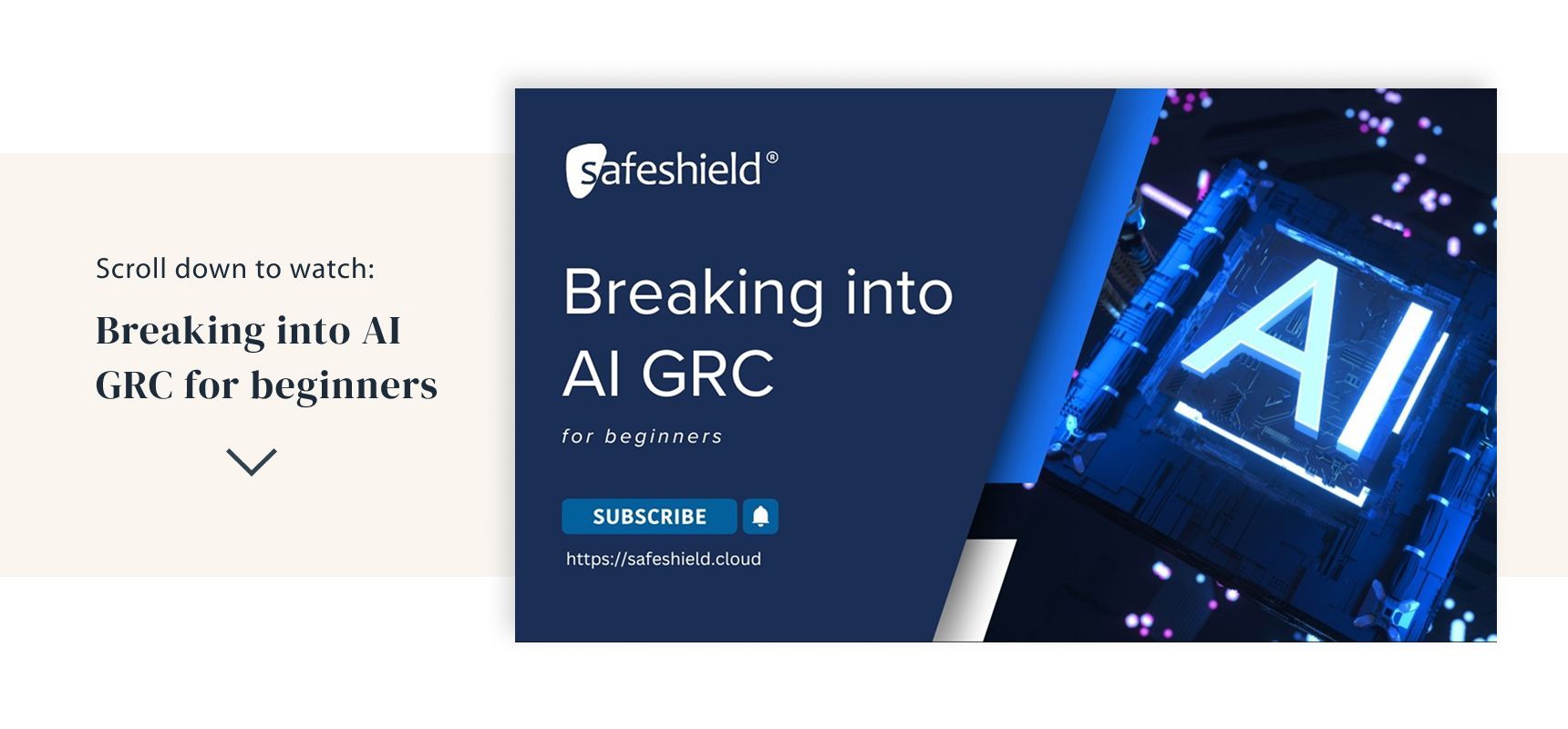
In this video, we walk through a practical beginner roadmap for getting into AI GRC in 2026: what AI GRC means, why it matters, and what beginners should learn.
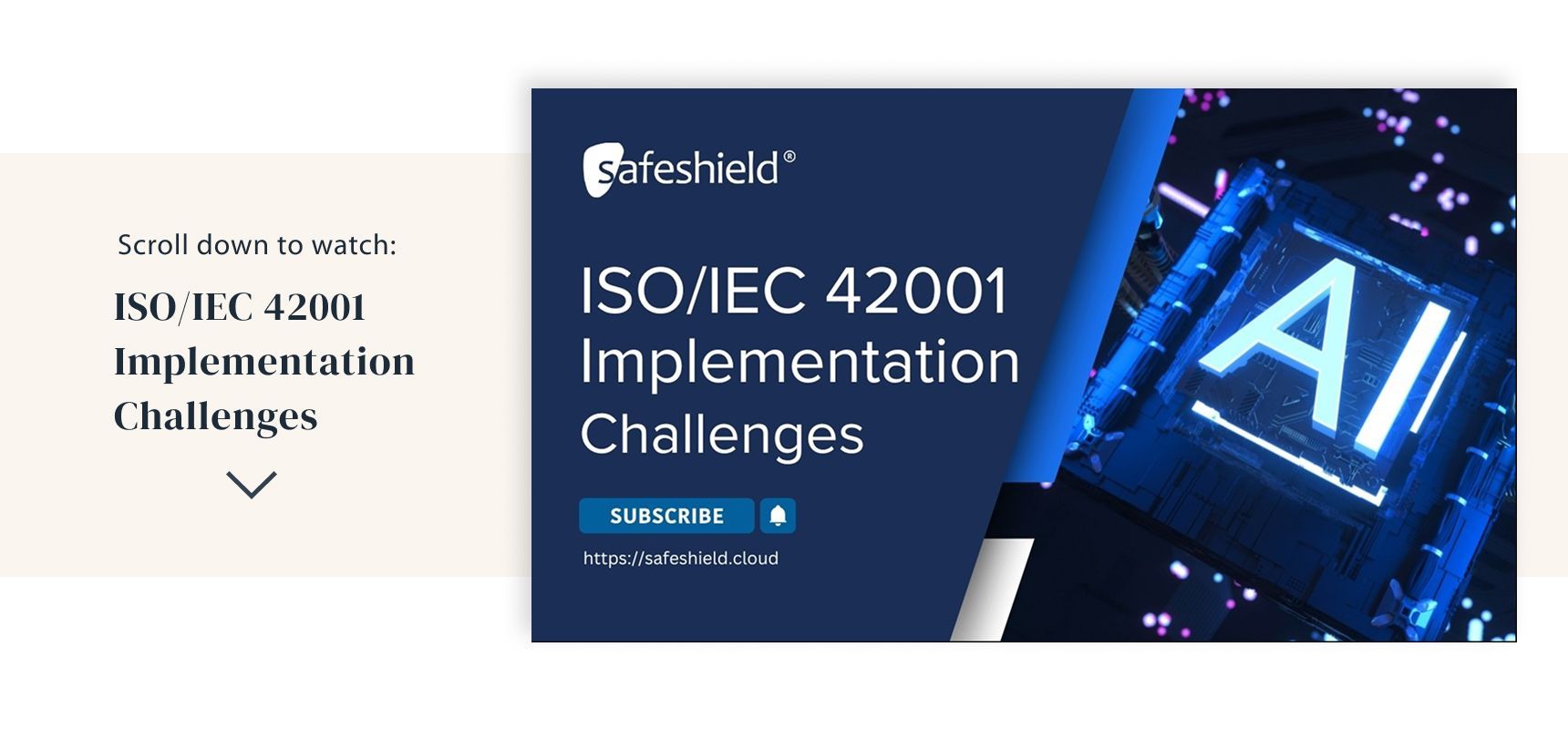
In this video, we look at some of the biggest mistakes organizations are making with ISO/IEC 42001 in 2026.

This free downloadable checklist will help you assess your organisation's position and readiness to begin the formal implementation of an AIMS.