Do You Need an AI GRC Certification? Here's How It Can Accelerate Your Career
December 2, 2025

You’ve probably noticed, AI is showing up in every conversation about governance, risk, and compliance.
And for good reason.
Artificial intelligence isn't just some side project to play around with in your spare time. It’s being used across major industries to drive decisions.
This is changing what “good governance” actually means.
So, if you work in GRC, you’re already asking the right question:
How do I stay relevant when the systems I’m governing can think for themselves?
That’s where AI GRC certification
comes in. It provides the tools you need to become keep up with the changing world of GRC. As technology changes, you need to be able to change with it.
Why AI GRC Matters Right Now
Governance was built for predictable systems that follow instructions. AI systems don’t.
They learn. They adapt. And sometimes, they behave in ways that surprise even the people that built them.
That unpredictability introduces a new layer of risk: bias, data misuse, explainability gaps, even ethical blind spots. Traditional controls weren’t designed for that level of complexity.
AI Governance, Risk, and Compliance (GRC) addresses this problem.
It brings structure to how organizations design, train, monitor, and evaluate AI systems.
It’s how you make sure progress doesn’t outrun accountability.
And as frameworks like the EU AI Act, ISO/IEC 42001, and the NIST AI RMF
gain global traction, AI GRC is quickly becoming a must have.
What an AI GRC Certification Can Teach You
Think of AI GRC certification as learning the operating manual for responsible AI. Instead of learning about coding or writing algorithms, you learn and understand how to connect technical decisions with business risk, compliance, and accountability.
Through certification, you’ll learn how to map AI risks to your organization's goals and apply frameworks like ISO/IEC 42001
or the EU AI Act
in real-world contexts. You’ll explore how to design policies that clearly define roles and responsibilities, build documentation and audit trails that hold up under scrutiny, and monitor bias, fairness, and performance as systems evolve.
By the end of the course, you’ll know how to turn complex ethical principles into everyday business practice.
Who It's For
AI GRC certification is for anyone who carries responsibility for trust inside an organisation.
If you’re a GRC professional, it helps you move beyond traditional compliance and into the world of intelligent systems. If you work in risk or audit, it gives you the tools to understand algorithmic models and assess their real-world impact. For privacy and legal specialists, certification provides a structured way to translate emerging AI laws into practical policy. And for leaders or managers, it offers a framework to build responsible AI strategies that align innovation with accountability.
No matter your role, if your work touches risk, regulation, or decision-making, AI GRC is fast becoming an essential part of your professional toolkit.
How Certification Moves Your Career Forward
Right now, companies everywhere are racing to establish AI oversight. They’re building governance committees, defining accountability structures, and creating roles that didn’t exist a year ago. And they all need professionals who understand both compliance and the technology.
That’s where certification can give you the edge. It positions you to lead AI governance programs, advise on compliance with the EU AI Act and other important frameworks, and bridge the gap between technical and executive teams.
Earning an AI GRC certification makes you the person others rely on for clarity and confidence in how AI is managed.
Choosing the Right Program
Not all certifications are created equal, and choosing the right one can make all the difference in how useful your training actually is. A strong AI GRC program should leave you with real tools and frameworks you can apply straight away.
It should also align with recognized global standards like ISO/IEC 42001, the EU AI Act, and the NIST AI Risk Management Framework. Those are the benchmarks shaping responsible AI worldwide, and your course should show you exactly how to use them.
Finally, look for credibility. Accreditation matters. When a certification is recognized by professional bodies or aligned with established frameworks, it shows employers and clients that your expertise meets a consistent, global standard.
At SafeShield we help GRC professionals build the expertise to manage privacy and AI governance together.
Our AI course catalogue provides practical, certified training on responsible AI frameworks and effective risk management. Explore our AI GRC course catalogue here.
Also, subscribe to our YouTube channel @SafeshieldTraining
to explore free courses on AI governance, risk management, and compliance. It is an excellent way to learn the foundations of responsible AI and understand key principles such as accountability, traceability, explainability, non-discrimination, privacy, and security. It is also a great opportunity to deepen your knowledge and stay informed about emerging frameworks and best practices shaping the future of trustworthy AI.
Share this article
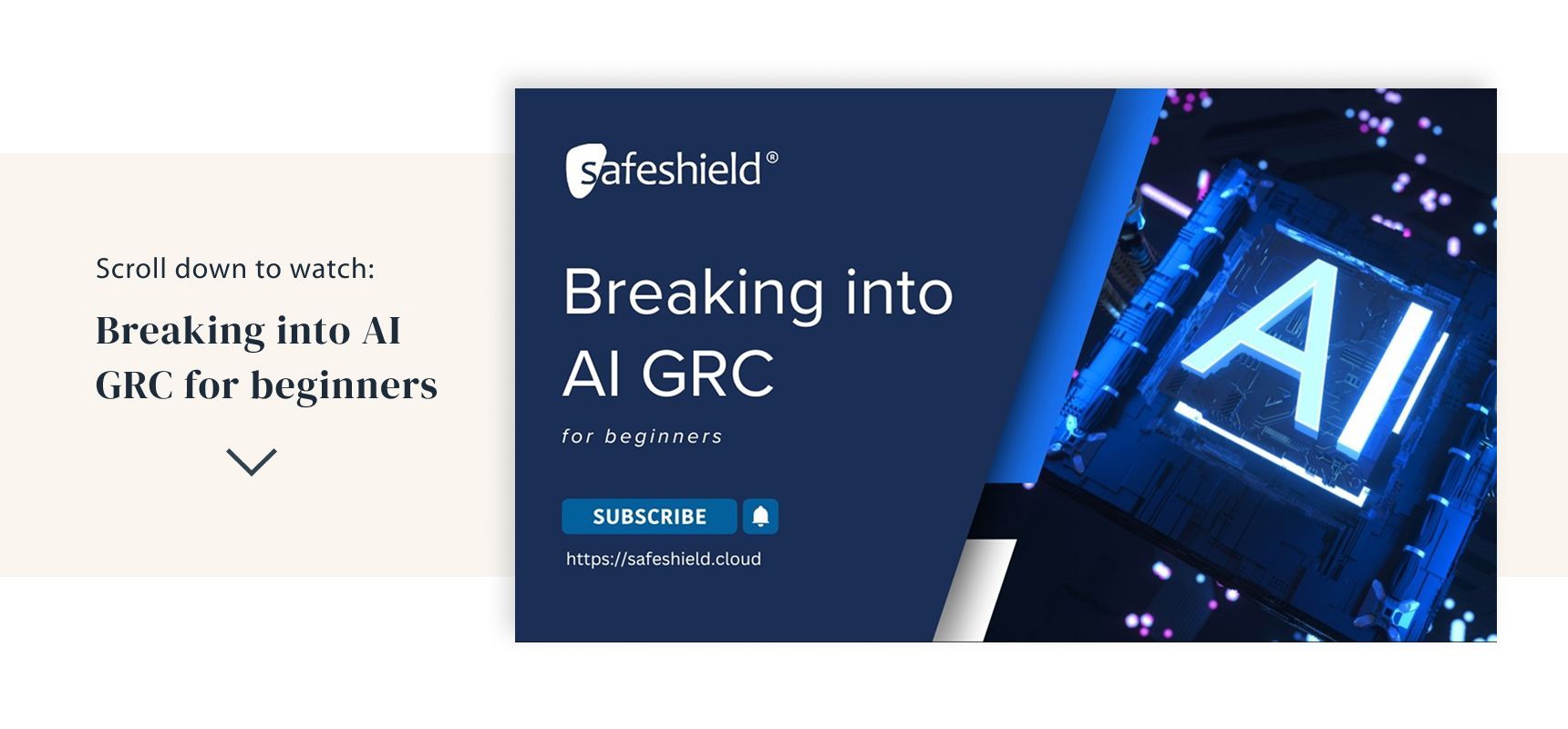
In this video, we walk through a practical beginner roadmap for getting into AI GRC in 2026: what AI GRC means, why it matters, and what beginners should learn.
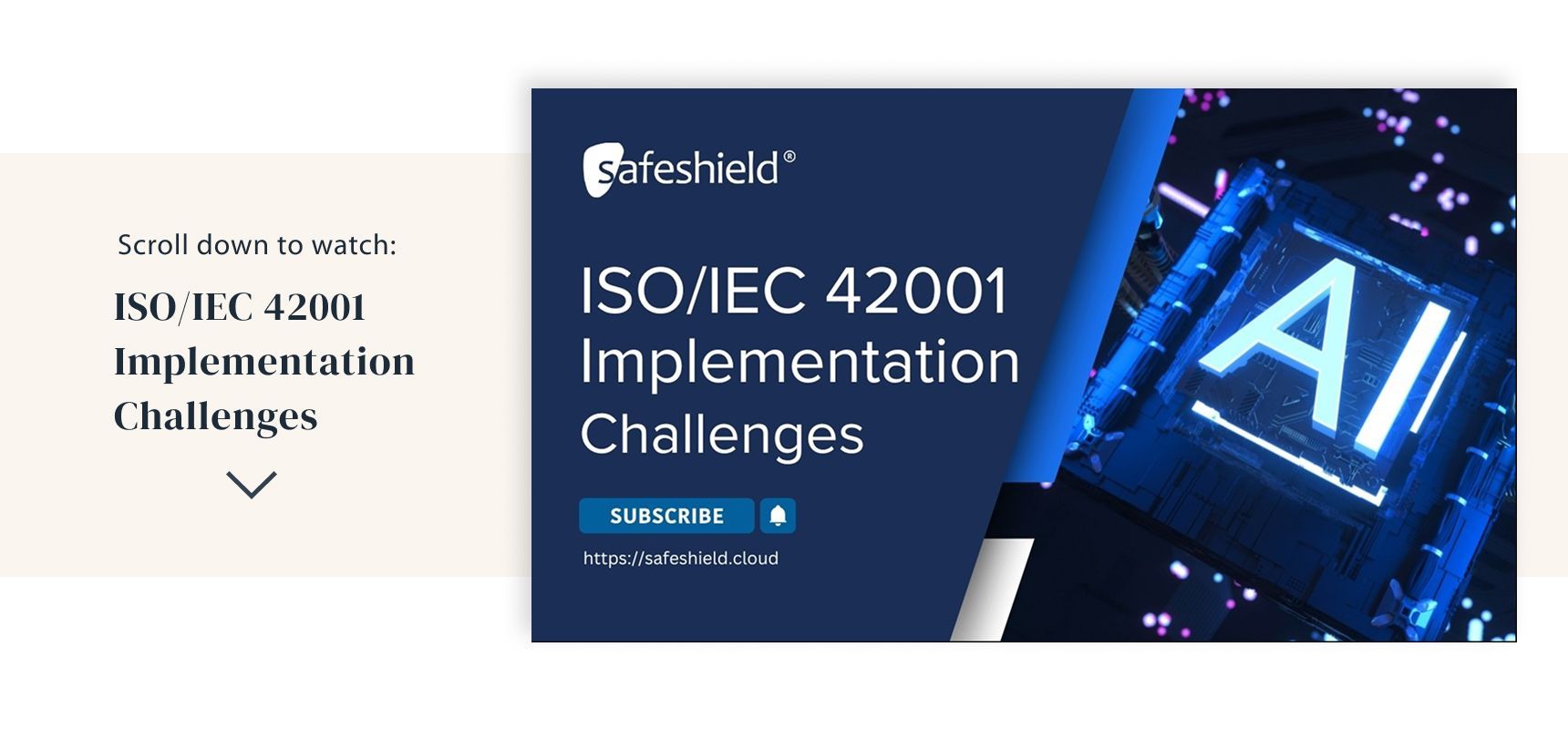
In this video, we look at some of the biggest mistakes organizations are making with ISO/IEC 42001 in 2026.

This free downloadable checklist will help you assess your organisation's position and readiness to begin the formal implementation of an AIMS.