Third-Party AI Governance: What AI GRC Professionals Need to Understand
September 1, 2026
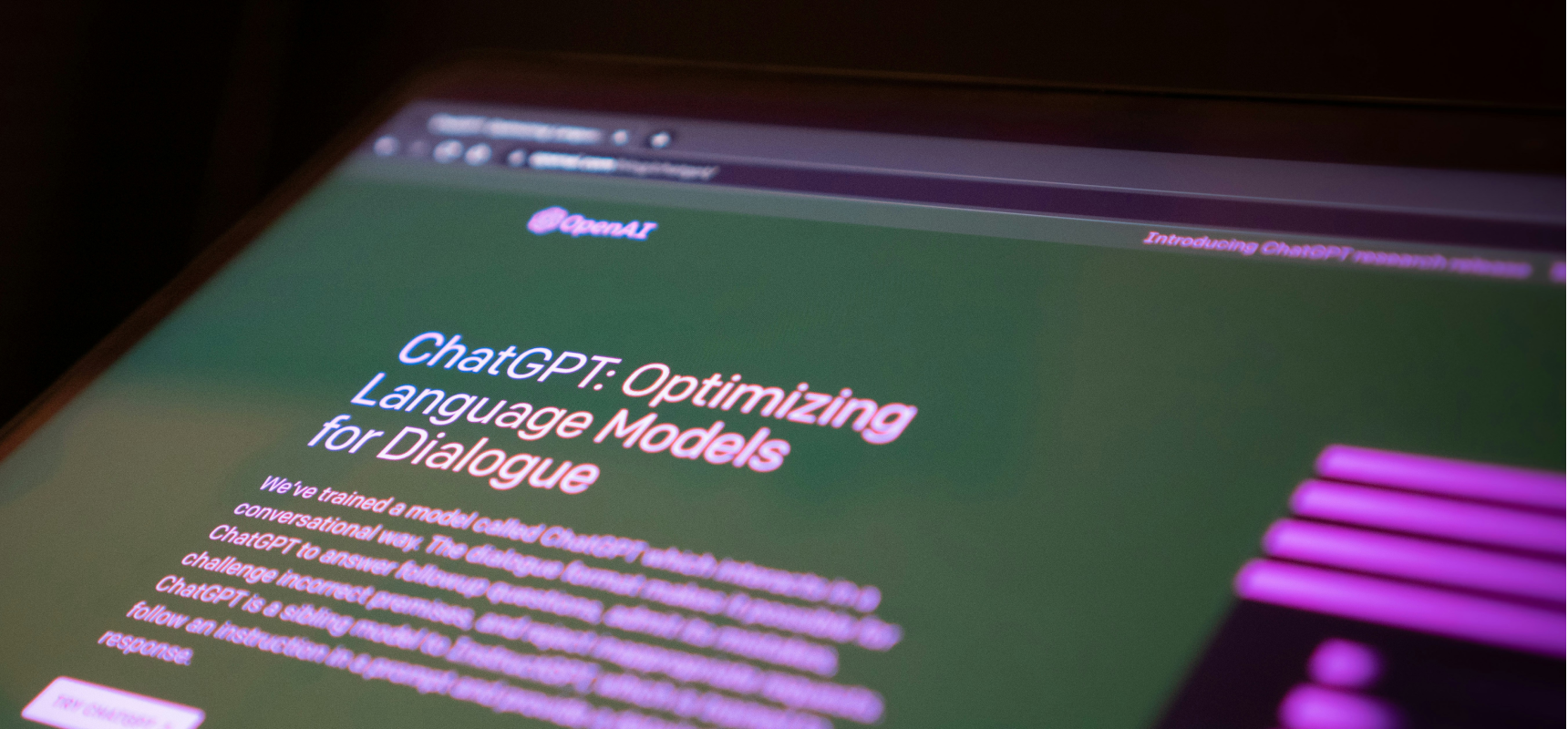
A large part of AI governance involves systems the organisation didn’t build.
Businesses increasingly rely on AI provided through external software, which creates a different governance challenge from working with technology developed entirely in-house. The organisation may have limited visibility into the underlying model, and some information may simply be unavailable.
That doesn’t make effective governance impossible. It changes what the organisation can control and, as a result, the questions an AI GRC professional needs to ask.
Understanding that distinction is useful for anyone learning how AI governance works in practice.
What changes when the organisation didn’t build the AI?
An organisation developing its own AI system may have direct access to the people responsible for building it. There may also be detailed records explaining how the system was tested and why certain decisions were made during development.
With third-party AI, much of that visibility can disappear.
The supplier controls the underlying technology, and some technical information may be considered proprietary. This means the organisation often has to govern a system without understanding every part of how it works.
What it does control is the way the system is used.
Take a company introducing an AI assistant for customer support. It may have no influence over the architecture of the underlying model, but it can decide whether the assistant has access to customer information and how much employees should rely on its responses.
It can also decide whether an output needs to be reviewed before it reaches a customer.
These decisions become especially important because the same AI capability can create very different concerns depending on where it is used.
A tool that summarises internal meeting notes creates a different governance problem from one that influences whether a job applicant progresses through recruitment. The underlying technology may be similar, but the consequences of using it are very different.
For an AI GRC practitioner, the intended use is often a better starting point than the technology on its own.
The question becomes less about whether the organisation fully understands the model and more about what the system will be allowed to do inside the business.
AI governance doesn't require perfect information
One of the more difficult realities of third-party AI governance is that some uncertainty will remain.
A supplier may not disclose every detail about its model, and the organisation may have limited information about how it was developed. The instinct can be to treat those gaps as something that must be resolved before a governance decision can be made.
In practice, that won’t always be possible.
A more useful question is whether the organisation knows enough to make a reasonable decision about the proposed use.
The practitioner may begin with what the supplier says the system is designed to do and any limitations it acknowledges. That can then be compared with how the organisation actually intends to use the product.
If information is missing, the next step is to understand what that uncertainty means in context.
For a low-impact internal tool, limited knowledge about part of the underlying model may be manageable. The organisation could restrict what employees enter into the system or keep the tool away from decisions where an unreliable output would have wider consequences.
A more consequential use may require much stronger evidence.
If an organisation is considering AI to support recruitment, for example, uncertainty about system performance could have a direct effect on applicants. The organisation may need to carry out its own testing or ask the supplier for more information before deciding whether the system is appropriate.
Human review may reduce some concerns, although simply adding a person to the process doesn’t automatically make the use acceptable. The organisation still needs to understand whether that reviewer can realistically identify a poor output and whether they’re able to reject it.
There will also be situations where the uncertainty is simply too significant for the intended use. Choosing not to deploy the system can be a legitimate governance decision.
This is a useful part of understanding AI GRC as a profession because the work doesn’t always end with a definitive technical answer. Practitioners often have to interpret incomplete evidence and help the organisation decide what level of uncertainty it is prepared to accept.
Two organisations could assess the same AI product and reach different conclusions without either one necessarily being wrong.
A system used for low-risk internal support may be acceptable with fairly simple controls, while the same product could be unsuitable in a more consequential setting. The difference comes from the way the system will be used and what happens if its outputs are wrong.
How ISO/IEC 42001 gives this work sturcture
ISO/IEC 42001 helps place these individual decisions within a wider Artificial Intelligence Management System, or AIMS.
An AIMS is concerned with how an organisation governs AI consistently over time, so it’s useful to think of third-party governance as more than a supplier review that ends once a product has been approved.
Once an AI system enters the organisation, responsibility for its use needs to be clear. The people responsible should understand why the system was introduced and what assumptions supported the original decision.
Those assumptions may not remain valid indefinitely.
A supplier might update the technology in a way that changes its behaviour. The organisation could also begin using the same product differently as employees become more familiar with it.
A generative AI tool originally approved for drafting internal material, for example, might gradually begin influencing customer-facing work. Nothing about the underlying product needs to change for the governance context to become different.
The management-system approach gives the organisation a way to respond to that kind of change.
Instead of treating the original approval as permanent, the organisation can establish when a system should be reviewed again and who is responsible for that decision. Information from the supplier can then be considered alongside what the organisation has learned from using the system itself.
This also makes accountability easier to maintain. Someone reviewing the system later should be able to understand who owns the use case and why the original decision was made, rather than having to reconstruct that reasoning after the fact.
For someone learning AI GRC, this is one of the more useful lessons ISO/IEC 42001 provides.
Governance isn’t only about deciding whether a particular AI system creates risk. It also requires a repeatable way to make decisions and revisit them when circumstances change.
Third-party AI makes that especially clear because control over the underlying technology is limited. The organisation has to concentrate on the parts of the decision that remain within its control.
Final thoughts
Third-party AI governance reflects a common reality of AI GRC work: practitioners won’t always have complete visibility into the technology they’re being asked to govern.
Effective governance depends on understanding what the organisation can control and recognising where uncertainty remains. From there, the question is whether the proposed use can be managed responsibly.
ISO/IEC 42001 helps place those decisions within a wider management system, so they can be documented and revisited as the organisation’s use of AI changes.
Safeshield’s ISO/IEC 42001 Resource Hub combines foundational guidance and practical learning resources for professionals developing their understanding of AI Management Systems. Our Hub allows you to explore ISO/IEC 42001, bringing together the resources you’ll need to continue your AI GRC journey.
Share this article